Selling a house on Gull Lake is not the same as selling a home in a Brainerd suburb, and the differences are not cosmetic. In this guide, Nisswa lakefront real estate expert Dan Schueller walks through what a Gull Lake sale actually requires. Gull Lake spans both Cass County and Crow Wing County, which means two otherwise identical lakefront homes on the same lake can face different septic requirements, different permitting paths, and different pre-listing timelines depending on which county the parcel sits in. At roughly 9,947 acres and part of a ten-lake chain, Gull Lake is one of the largest and most heavily developed recreational lakes in North Central Minnesota, with approximately 27.8 homes and cabins per shoreline mile and around 19 resorts including Cragun’s, Madden’s, and Grand View Lodge. Understanding that complexity before you price, before you prep, and before you choose an agent is the difference between a smooth closing and a costly surprise. In this blog post, Nisswa real estate expert Dan Schueller discusses the ultimate guide to selling a Gull Lake Minnesota house.
Key Takeaways
- Confirm your county before anything else. Gull Lake spans Cass County and Crow Wing County, and each county has its own approach to septic compliance at transfer. The county your parcel sits in determines your pre-listing timeline and which county offices you will deal with.
- Septic and well documentation can make or break a closing. A non-compliant system or a forgotten well discovered during escrow gives buyers leverage and can delay or kill a sale. Resolve these before listing, not during contract.
- Frontage quality and water depth move price more than square footage. Gull Lake buyers pay for shoreline bottom type, dock water depth, lot orientation, and privacy. Interior finishes matter considerably less here than on an inland property.
- The summer selling window on Gull Lake is real and it is narrow. Missing the Memorial Day to Labor Day buyer traffic window can mean waiting through an entire off-season for the next peak. Listing timeline and preparation must account for that reality.
To Discuss Your Home Sale or Purchase, Call or Text Today and Start Packing!
To sell a house on Gull Lake, Nisswa, or the surrounding areas, confirm which county your parcel sits in first, because that single fact determines your septic compliance path and pre-listing timeline. Complete all disclosure and compliance steps, including septic inspection, well documentation, and shoreland structure review, before listing rather than during escrow. Price the property based on frontage quality, shoreline bottom type, water depth at the dock, and lot orientation rather than interior square footage.
About Dan Schueller, Your Nisswa Real Estate Expert
This blog post is provided by Nisswa real estate expert Dan Schueller and the team at Your Home Sold Guaranteed Realty Exclusive. With over 50 years of experience in the North Central Minnesota real estate market, Dan and the team have built a reputation as one of the area’s most trusted and effective real estate professionals. As Broker/Owner with an office in Nisswa, we have successfully helped hundreds of families buy and sell homes each year, developing deep expertise in Nisswa’s lakefront properties, land sales, and Minnesota real estate regulations.
As Nisswa residents, we have a direct understanding of the local market conditions, county-specific procedures, and community needs across Crow Wing, Cass, Hubbard, Aitkin, Todd, Wadena, and Morrison counties. Our commitment is to provide trusted, authoritative real estate information to our neighbors in Nisswa and the surrounding North Central Minnesota communities. However, this information does not constitute legal advice or a guarantee of specific results. For personalized guidance on your unique home buying or selling situation, contact us today for a free, no-obligation consultation.

Step One: Determine Which County Your Gull Lake Parcel Is In
Before you schedule an inspection, before you call a photographer, and before you have a pricing conversation, confirm one thing: which county your parcel sits in. Gull Lake straddles the border between Cass County and Crow Wing County, and that line is not visible from the water. Two lakefront properties sitting side by side on the same shoreline can face entirely different regulatory requirements at the point of sale depending on which side of that county line the lot occupies.
The communities on and around Gull Lake reflect that dual-county reality:
- East Gull Lake: city on the lake, primarily Cass County
- Lake Shore: unincorporated community, Crow Wing County side
- Nisswa: nearby city in Crow Wing County, just south of the lake
- Brainerd and Baxter: larger regional centers southeast of the lake, Crow Wing County
Confirming your county is straightforward. Your property tax statement will show the county. Your parcel number and county assessor’s website will confirm it. Do this first, because it determines which Environmental Services department governs your septic compliance and which permitting office you will work with before listing. An agent who does not know which county your parcel sits in does not know this lake well enough to list it.
How the Gull Lake Chain Affects Marketability
Gull Lake is connected to a chain of ten lakes spanning Cass and Crow Wing counties. That connectivity is a significant amenity, but it creates a pricing and marketing distinction that sellers need to understand. “On the Gull Lake Chain” and “on the main lake body” are different products, and they attract partially different buyer pools at different price points.
A property with direct access to the main lake body, meaning a buyer can pull out of the dock and reach open water without navigating a channel or bay, offers the broadest buyer appeal. Properties that require navigating a narrow connecting channel to reach the main lake are a different product. Some buyers specifically seek the quieter character of a bay or inner lake position. Others want the full open-water experience and will only consider main-lake frontage. Sellers should know exactly where their property sits within the chain and be prepared to explain it clearly. Buyers and their agents will ask, and the answer shapes how the property is positioned and what comparable sales are actually comparable.
| Evaluation Factor | Main Lake Body | Bay or Channel Position | Connected Chain Lake |
|---|---|---|---|
| Buyer Pool Breadth | Broadest | Moderate-Narrower | Narrowest for main lake listing |
| Boat Traffic Exposure | Higher | Lower | Lowest |
| Navigation to Open Water | Direct | Requires channel transit | Requires multi-lake transit |
| Relative Price Positioning | Typically commands premium | Typically neutral | Typically modest discount relative to main-lake comps |
| Marketing Approach | Emphasize open water and resort proximity | Emphasize quiet and privacy | Emphasize seclusion and chain access |
Septic, Well, and Shoreland: The Diligence That Decides Your Closing
This is the section of a Gull Lake sale that surprises the most sellers and derails the most closings. None of it is complicated once you understand it. All of it takes longer than sellers expect when they discover it mid-transaction rather than before listing.
Septic Compliance: Why the County Line Changes Everything
Minnesota has no single statewide point-of-sale septic inspection requirement. The rule is set county by county. That is exactly why the Gull Lake bi-county split is not a geographic trivia point. It is the most operationally important fact about your listing.
Here is how each county generally approaches septic compliance at transfer:
Cass County: Under the county’s Subsurface Sewage Treatment System (SSTS) ordinance, a system on real property in Cass County must be brought into compliance upon conveyance of the property. Before conveyance, the seller must disclose in writing to the buyer the status and location of all known SSTS on the property, by delivering either a sworn affidavit from the seller that no SSTS exists on the property to the best of their knowledge after diligent investigation, or a certificate of compliance or notice of non-compliance resulting from a compliance inspection conducted by a Minnesota state-registered inspector.
Crow Wing County: A compliance inspection conducted by a state-licensed inspector is required for permit applications within the shoreland district. Essentially all Gull Lake property falls within the shoreland area, which is generally defined as the land within 1,000 feet of the lake’s Ordinary High Water Level.
The practical consequence for sellers is direct. A failed or non-compliant septic system discovered after an offer is accepted can stop a closing entirely. It can require a replacement that takes weeks to design, permit, and install, particularly in a shoreland district where setback constraints are tight and particularly in late fall or winter when ground access is limited. It can hand a buyer enormous negotiating leverage at exactly the wrong moment.
The remedy is equally direct: schedule the compliance inspection before you list, not after you accept an offer. When you know the result upfront, you control what happens next.
Important: County ordinances are amended over time, and your specific obligation turns on your parcel’s county, its circumstances, and current county rules. This guide presents how each county generally approaches SSTS compliance, not a determination of what your parcel requires. Confirm your specific obligations with Cass County Environmental Services, Crow Wing County Environmental Services, and a licensed Minnesota septic inspector before listing.
“The single most expensive mistake we see Gull Lake sellers make is waiting until they have an offer in hand to address the septic question. By then, the buyer has all the leverage. When you find out first and get ahead of it, you control the outcome.” – Dan Schueller
The Minnesota Well Disclosure Certificate
Minnesota’s Ground Water Protection Act requires sellers to disclose to the buyer and to the state the location and status of all wells on the property at the time of transfer. This is not optional and it is not discretionary. Many Gull Lake properties, particularly older cabins and seasonal homes, have wells from prior decades that the current owner has never used and may have forgotten about. Unused wells that have been properly sealed carry their own documentation requirements.
Before listing, walk the property and identify every well. Review any records you have. If you are uncertain whether a well exists, consult with a licensed well contractor. A well discovered during a transaction rather than disclosed upfront creates delay, erodes buyer trust, and puts the seller’s legal compliance in question. Finding it yourself and disclosing it cleanly is always better than having a buyer’s inspector find it first.
Shoreland Setbacks and Nonconforming Structures
Minnesota shoreland rules set minimum setbacks from the Ordinary High Water Level and limit impervious surface coverage on lakefront parcels. These rules apply to virtually all Gull Lake property. The shoreland classification and specific setback requirements for any parcel are set at the county and municipal level, so the exact requirements depend on your location.
Here is the issue that creates the most buyer questions on Gull Lake: many older cabins and lake homes were built closer to the water than current setback rules allow. A structure that was lawfully built before the current rules took effect is typically classified as legally nonconforming. It can generally remain as it is and be used, repaired, and maintained. However, a buyer who plans to tear down the existing structure and build new, or who wants to expand the footprint significantly, may not be able to place the new structure where the old one stands.
This distinction matters to a seller because it shapes which buyer the property is right for. A cabin with a nonconforming footprint close to the water is a perfectly functional property for a buyer who wants to use it as-is. It may present a meaningful constraint for a buyer planning a teardown rebuild. Understanding your structure’s status before listing allows you to market the property accurately, answer buyer questions confidently, and avoid surprises during the inspection and appraisal process.
Do not make any assumptions about your specific structure’s conforming status based on general information. Confirm the actual setback requirements and your structure’s status with your county’s environmental services or planning department before listing.
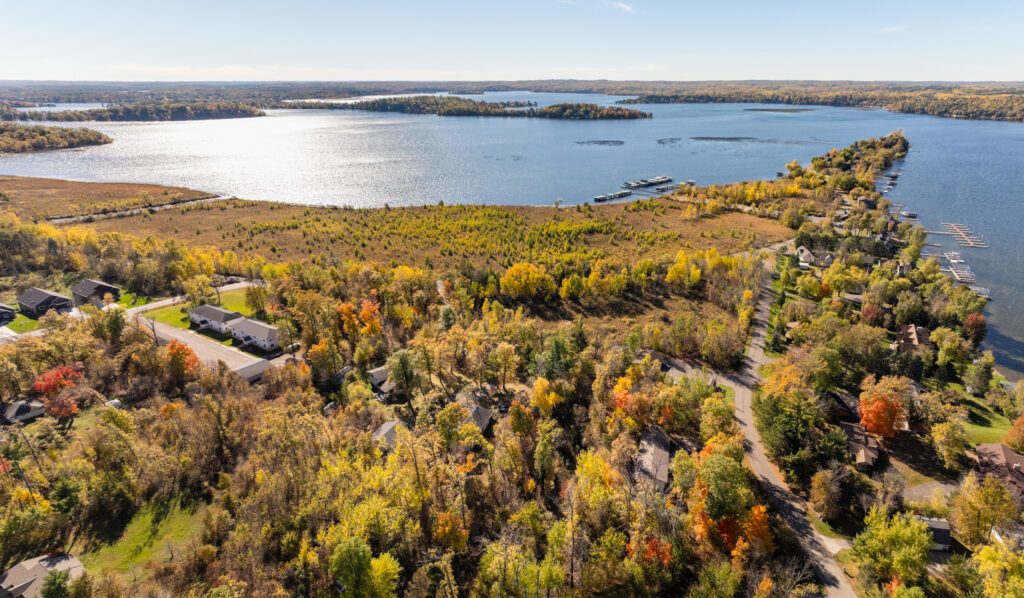
Pricing Gull Lake Frontage: Why Square Footage Is the Wrong Metric
Price per square foot is a useful shorthand for inland residential markets. On Gull Lake, it is close to meaningless. Buyers, appraisers, and experienced Nisswa real estate agents price Gull Lake lakefront property on an entirely different set of factors. Sellers who anchor to interior square footage comparables from off-water sales routinely misprice, often in both directions depending on the property.
The factors that actually drive value on Gull Lake frontage are these:
Frontage footage and quality. How many feet of shoreline does the lot own? What does that shoreline look like up close? A lot with a wide, gradually sloping sandy entry is a meaningfully different product than a lot with a narrow rocky frontage or a heavy weed line, regardless of how similar the cabins on each lot appear from the road.
Shoreline bottom type. Hard sand bottom commands a premium on Gull Lake. Buyers with families, and especially buyers with young children, specifically ask about bottom type before they tour. Muck, heavy vegetation, or rock affect how the property is used every day on the water.
Water depth at the dock. Can the water depth at the dock and at the end of a reasonable dock extension support a standard boat lift? Shallow-water lots limit what a buyer can actually do with the property. This factor feeds directly into value and must be documented accurately before listing.
Lot orientation and solar exposure. West-facing lots that capture evening sun and sunset views over the water command consistent premiums on Gull Lake. The ability to sit on the dock or deck in the evening is central to how most buyers intend to use a lake property. East-facing lots receive morning sun and often trade at a modest discount relative to west-facing comparable lots.
Elevation and steps to water. A flat lot with gradual, accessible shoreline entry is a functionally different product than a bluff lot requiring a significant stairway down to the water. Elevation affects usability for older buyers, buyers with mobility considerations, and families with young children. It matters to buyers even when sellers do not think about it.
Privacy and screening from neighbors. Gull Lake’s shoreline is heavily developed. At approximately 27.8 homes per shoreline mile, lots with natural vegetation buffers, generous spacing from neighboring structures, or favorable lot geometry command meaningful premiums. Privacy is a finite and non-reproducible feature on a heavily developed lake.
Main lake versus bay or channel position. Covered in Section 1. Position within the Gull Lake Chain affects both the price ceiling and the breadth of the buyer pool.
Proximity to resort and boat traffic. Properties near Cragun’s, Madden’s, or Grand View Lodge benefit from amenity proximity and the energy of a resort area. Some buyers specifically want that. Others want distance from resort boat traffic and want a quieter shoreline experience. Knowing which your listing offers shapes how it is positioned and which buyers to target.
Septic and well status. A documented, compliant septic system with a clean inspection result adds to buyer confidence and reduces negotiating risk. An unknown or non-compliant system is a discount factor, often a significant one.
Conforming status of the structure. As covered in the previous section, a legally nonconforming cabin close to the water affects which buyer the property is right for and therefore which comps are actually comparable.
Gull Lake Frontage Quality Factors
What Actually Moves Price on This Lake
| Frontage Factor | Directional Price Signal |
|---|---|
| Shoreline Bottom Type | Premium Factor: Hard sand bottom |
| Lot Orientation | Premium Factor: West-facing sunset orientation |
| Main Lake vs. Bay Position | Premium Factor: Main lake direct access |
| Septic and Well Status | Premium Factor: Documented compliant septic |
| Water Depth at Dock | Premium Factor: Deep enough to accommodate standard boat lift |
| Elevation and Steps to Water | Premium Factor: Flat lot with gradual, accessible entry |
| Privacy and Screening | Premium Factor: Natural vegetation buffers and generous spacing |
| Frontage Footage | Premium Factor: Wide shoreline width with extended water frontage |
| Lot Orientation | Neutral Factor: East-facing orientation |
| Main Lake vs. Bay Position | Neutral Factor: Bay position with chain access |
| Proximity to Resort Traffic | Neutral Factor: Varies based on buyer preference (amenity proximity vs. quiet shoreline) |
| Structure Conforming Status | Neutral Factor: Legally nonconforming (functional as-is, but limits teardown footprint) |
| Shoreline Bottom Type | Discount Factor: Muck or heavy weed bottom |
| Water Depth at Dock | Discount Factor: Shallow dock water limiting everyday use |
| Elevation and Steps to Water | Discount Factor: Bluff with many steps down to the water |
| Septic and Well Status | Discount Factor: Non-compliant or unknown septic system |
Appraisal Risk on Lakeshore and How a Listing Agent Prepares the Appraiser
Lakefront appraisals are more complex than inland residential appraisals because frontage quality varies enormously between otherwise similar-looking properties. When a comparable sale has meaningfully different frontage, bottom quality, or orientation than the subject property, the appraiser must make adjustments. Those adjustments require local judgment, and an appraiser who does not specialize in lakefront properties may underestimate the premium or discount that specific frontage characteristics command on Gull Lake.
An experienced listing agent addresses this proactively. Before the appraisal, the agent prepares a written summary for the appraiser documenting the subject property’s frontage footage, shoreline bottom type, water depth at the dock, lot orientation, and the relevant ways the property differs from or exceeds the comparable sales. This preparation can prevent an appraisal from coming in below contract price on a well-priced listing where the frontage quality genuinely justifies the price.
The Gull Lake market is a premium lake with limited shoreline supply, strong and concentrated demand for quality frontage, and a heavily developed shoreline that constrains new inventory. For an address-specific valuation that accounts for your specific frontage characteristics and current market conditions, contact Dan Schueller and the team at Your Home Sold Guaranteed Realty Exclusive directly. Explore current Minnesota real estate for sale listings to understand the broader North Central Minnesota real estate market context.
Timing, Docks, and What Actually Conveys: The Operational Details Most Sellers Miss
Understanding when to list, what to do with the dock, and what the buyer actually inherits from a tax and legal standpoint separates sellers who have a smooth closing from those who reach the closing table with unresolved surprises.
The Seasonal Window Is Real, and Missing It Has a Cost
The Brainerd Lakes market follows a concentrated seasonal pattern. The primary buyer pool for Gull Lake lakefront property is most active from ice-out in the spring through Labor Day weekend in early September, with meaningful secondary interest in early fall among buyers who missed the summer window. Buyers from the Twin Cities metro and from out of state, including Wisconsin, Iowa, and Illinois, are actively touring lake properties during this peak window. Buyers who want to be on the water by the Fourth of July are making decisions in April and May.
A well-priced, well-documented Gull Lake listing that enters the market before Memorial Day has access to the broadest possible buyer pool. A listing that is not ready until mid-July competes for a shrinking pool of buyers with less time before the season ends. A listing that enters in September risks carrying the property through the full fall and winter before the next peak season.
This is not an argument to rush a listing that is not ready. A property with unresolved septic, well, or shoreland issues listed in April will generate complications regardless of timing. The seasonal reality is an argument to plan backward from a target list date and to determine, honestly, how long the pre-listing sequence will actually take.
“Gull Lake has a concentrated buyer season, and buyers who want to be on the water by the Fourth of July are making decisions in April and May. Our database of over 17,000 pre-qualified buyers includes people who have told us they want a Gull Lake property. When a listing is ready, we can reach those buyers before we ever post to the MLS.” – Dan Schueller
Docks, Lifts, and the 21-Day AIS Rule
Docks, boat lifts, and water equipment are commonly negotiated items in a Gull Lake transaction. Sellers should decide early whether the dock and lift convey with the sale or will be removed. Buyers will ask, and the answer affects perceived value and sometimes the negotiated price.
There is a specific regulatory detail that many sellers and their agents do not know: Minnesota law requires docks and lifts to remain out of the water for at least 21 days before being placed into a different waterbody. Additionally, moving a dock or lift that has attached zebra mussels requires a free DNR permit. These rules exist to prevent the spread of aquatic invasive species between lakes.
This matters practically when a seller plans to take a dock or lift to another lake. The 21-day window needs to be built into the closing and transition timeline. Do not plan to remove the dock on the day of closing and launch it into another lake the same afternoon. Check the current DNR infested-waters listings for Gull Lake before making any plans involving dock or lift relocation. DNR listings are updated and the current status should be verified directly rather than assumed.
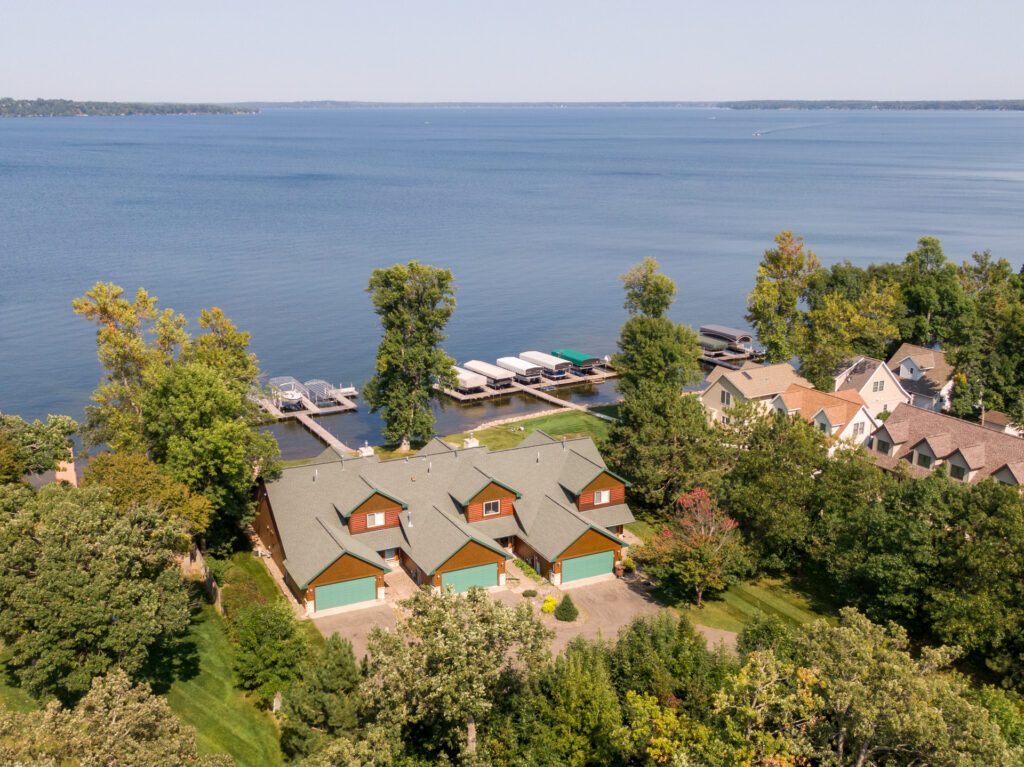
Property Tax Classification: What the Buyer Inherits
Minnesota’s property tax system treats different types of residential property differently. The state general levy applies to seasonal recreational residential property, while homestead and non-homestead residential classifications are exempt from it. Whether a Gull Lake property is classified as a seasonal cabin or as a primary residence materially changes the tax picture a buyer inherits.
Sellers should know their property’s current tax classification and be prepared to explain it clearly to prospective buyers. Buyers making an offer will factor ongoing tax liability into their analysis, and a buyer who discovers an unexpected classification late in the transaction may have questions about the carrying cost they are inheriting. Tax rates and levy percentages are subject to annual change. Buyers should verify current tax liability for any specific parcel directly with the county assessor.
Minnesota Seller Disclosure
Minnesota requires sellers to provide a written disclosure of material facts known to the seller that could adversely and significantly affect an ordinary buyer’s use and enjoyment of the property, or to provide a permitted alternative. This is a real legal obligation with real consequences. It applies to lakefront property as fully as it applies to any other Minnesota residential sale.
Sellers should review their disclosure obligations with a Minnesota real estate attorney before listing. This guide does not constitute legal advice, and the specific obligations that apply to your property depend on facts and circumstances that require professional review.
Your Gull Lake Selling Action Plan
A Gull Lake sale has more moving parts than an inland sale. The sequence below organizes those parts into a logical order. If you would rather start by understanding your options, see who can help you sell a lakefront property on Gull Lake. Working through them in this order reduces the risk of a late-transaction surprise.
- Confirm your county. Determine whether your parcel sits in Cass County or Crow Wing County using your tax statement or county assessor’s website. This is the first step because it determines which county’s requirements apply and which Environmental Services department to contact.
- Contact the appropriate county Environmental Services. Cass County Environmental Services and Crow Wing County Environmental Services can explain the current SSTS compliance requirements for your parcel. Do this early, because the compliance path has its own timeline.
- Schedule a septic compliance inspection. Hire a Minnesota state-registered septic inspector before listing. If the system is compliant, you have documentation that strengthens buyer confidence. If it is not compliant, you have time to address it before accepting an offer.
- Document all wells. Locate and document every well on the property. Review any records you have and consult a licensed well contractor if you are uncertain. Prepare for the Minnesota well disclosure requirement at transfer.
- Confirm your structure’s shoreland and conforming status. Contact your county planning or environmental services department to understand the current setback requirements and whether any structures on your property are legally nonconforming. Be prepared to answer buyer questions about this clearly.
- Decide what conveys. Determine whether the dock, boat lift, and water equipment convey with the sale or will be removed. If you plan to relocate a dock or lift to another lake, account for the 21-day out-of-water requirement in your timeline.
- Know your property tax classification. Review your current tax classification with the county assessor so you can explain it accurately to prospective buyers.
- Engage a Gull Lake listing specialist. Interview agents with specific Gull Lake experience, not general lakefront experience. Ask them specifically: How do you comp frontage quality differences between Gull Lake properties? What is the current septic compliance requirement for a parcel in my county? Which county offices do you work with for Gull Lake listings? Have you sold properties on both the Cass County and Crow Wing County sides of the lake?
- Price based on frontage, not square footage. Work with your agent to identify comparable sales that genuinely match your frontage characteristics, not just interior square footage. Prepare for the appraiser conversation in advance.
- Align your list date with the seasonal buyer pool. Work backward from a target list date in late April or early May if possible, and confirm that the pre-listing sequence, including compliance steps, preparation, and professional photography, can be completed in time.
- Review your disclosure obligations. Consult a Minnesota real estate attorney about your seller disclosure requirements before listing.
When you work with Dan Schueller and the team at Your Home Sold Guaranteed Realty Exclusive, the process to sell your home in Nisswa and Gull Lake includes a buyer database of over 17,000 pre-qualified buyers, many of whom have specifically expressed interest in Gull Lake and the Gull Lake Chain. That database allows the team to reach motivated buyers before a listing ever appears on the MLS, a meaningful advantage in a market with a concentrated seasonal buyer window.
The team’s Guaranteed Cash Offer program can provide a written cash offer on your Gull Lake property within 24 hours, which is particularly relevant if you need to move on a specific timeline or do not want to risk carrying the property through an off-season. The Guaranteed Sale Program means your home will sell at a price acceptable to you within the agreed timeframe, or the team will buy it. All incentives and guarantees must be agreed upon and in writing, and specific terms and qualifying parameters apply to each program. Contact Dan directly to understand which programs apply to your property and at what price parameters.
The team’s track record speaks for itself. The team sells homes approximately 70% faster than other local realtors, typically sells for 10% more than market average, which is approximately $12,000 more on a $400,000 sale, and maintains a 99% first-time listing success rate across more than 100 transactions per year. Sellers and buyers throughout the Brainerd Lakes area have recognized that track record with hundreds of 5 Star Google reviews.
Dan’s office is located at 24199 State Hwy 371, Unit #4, in Nisswa, minutes from Gull Lake. Learn more about the real estate agency in Nisswa, MN and the full range of seller services available. For a closer look at the track record behind this approach, see why Dan Schueller is the best realtor to sell your Gull Lake home in Minnesota.
Why Choose Dan Schueller to Sell Your Gull Lake Home

Selling on Gull Lake requires an agent who understands not just lakefront property in general, but this lake specifically: the bi-county split between Cass County and Crow Wing County, the different SSTS compliance paths each county requires, the Gull Lake Chain geography and how main-lake versus bay-or-channel position affects buyer pool and price. The frontage quality factors that drive value on this shoreline require nuanced strategy, making it vital to work with the top realtor in Nisswa. Dan Schueller and the team at Your Home Sold Guaranteed Realty Exclusive have worked Gull Lake listings from both sides of that county line for over 50 years. We can also showcase our exceptional homes for sale in Nisswa to help coordinate your next move locally. The team’s database of over 17,000 pre-qualified buyers includes out-of-state buyers and Twin Cities buyers actively seeking properties on the Gull Lake Chain. The Guaranteed Cash Offer and the Guaranteed Sale Program are particularly relevant for Gull Lake sellers who cannot afford to miss the summer season and carry a property through another winter. All incentives and guarantees must be agreed upon and in writing.
With over 50 years of experience in the North Central Minnesota real estate market, Dan and the team have built a reputation as one of the area’s most trusted and effective real estate professionals. As Broker/Owner of Your Home Sold Guaranteed Realty Exclusive with an office in Nisswa, Dan has deep expertise in lakefront properties, land sales, commercial and residential real estate throughout the Brainerd Lakes area.
Our Real Estate Expertise
The team at Your Home Sold Guaranteed Realty Exclusive has established their reputation through:
- Successfully helping hundreds of families buy and sell homes each year
- Developing specialized knowledge of North Central Minnesota’s lakefront properties and unique market dynamics
- Selling homes 70% faster than other local realtors through effective marketing techniques
- Building a database of over 17,000 pre-qualified home buyers ready to purchase
- Deep understanding of county-specific regulations across Crow Wing, Cass, Hubbard, Aitkin, Todd, Wadena, and Morrison counties
Why Trust Us
Dan Schueller and the team’s reputation speaks for itself:
- Proven Results: We typically sell homes for 10% more than market average, putting thousands of extra dollars in sellers’ pockets
- Client Satisfaction: Our hundreds of 5-Star Google Reviews showcase our commitment to exceptional service
- Guaranteed Performance: Our unique guarantees ensure your complete satisfaction or we’ll buy your home
- Local Knowledge: As Nisswa residents with over 50 years in the market, we understand our community and care deeply about the people we serve
- Lakefront Expertise: We specialize in waterfront properties with deep knowledge of shoreline regulations, dock permits, and lakefront valuation factors
- Personalized Approach: We take time to understand your specific real estate goals, ensuring you’re never just another transaction
Community Commitment
Our dedication extends beyond real estate. We proudly support:
- Homeless and Wounded Warriors – MN with a portion of every transaction
- Nisswa Police and Fire Departments with discounted commissions
- Local charitable organizations throughout North Central Minnesota
- “Go Serve Big” philosophy – changing lives in the communities we live and work in
To Discuss Your Home Sale or Purchase, Call or Text Today and Start Packing!
Contact Dan Schueller and the team at Your Home Sold Guaranteed Realty Exclusive by calling or texting (218) 656-6469 for expert guidance on buying or selling your home in Nisswa and North Central Minnesota.
Follow Us on Social Media
Stay connected with Dan Schueller and Your Home Sold Guaranteed Realty Exclusive for the latest North Central Minnesota real estate insights, market updates, and local community news:
- YouTube – Market updates and property tours
- Facebook – Community engagement and listings
- Instagram – Behind-the-scenes and lifestyle content
- TikTok – Quick tips and market insights
Frequently Asked Questions
Minnesota requires sellers to disclose material facts known to them that could adversely and significantly affect an ordinary buyer’s use and enjoyment of the property. For Gull Lake and other North Central Minnesota lakefront properties, common issues include non-compliant or aging septic systems, undisclosed or improperly sealed wells, legally nonconforming structures that sit closer to the water than current shoreland setbacks allow, and aquatic invasive species affecting dock and lift equipment. Sellers should review their specific disclosure obligations with a Minnesota real estate attorney before listing.
Minnesota seller liability for non-disclosure of known material defects generally runs with the standard statute of limitations for fraud or misrepresentation claims, which can extend for years after closing depending on when the buyer discovers the issue. Sellers who knowingly fail to disclose material facts, such as a non-compliant septic system, a known well, or a flooding history, face the greatest exposure. Providing accurate, complete written disclosures before closing is the primary protection. Consult a Minnesota real estate attorney for advice specific to your transaction.
Whether a septic compliance inspection is required depends on which county your Gull Lake parcel sits in. Gull Lake spans both Cass County and Crow Wing County, and each county has its own approach to SSTS compliance at the point of sale. Cass County requires the seller to deliver either a sworn affidavit regarding SSTS status or a certificate of compliance from a state-registered inspector before conveyance. Crow Wing County requires a compliance inspection for permit applications within the shoreland district, which covers essentially all Gull Lake property. Confirm your specific parcel’s obligations directly with the relevant county Environmental Services department and a licensed Minnesota septic inspector before listing.