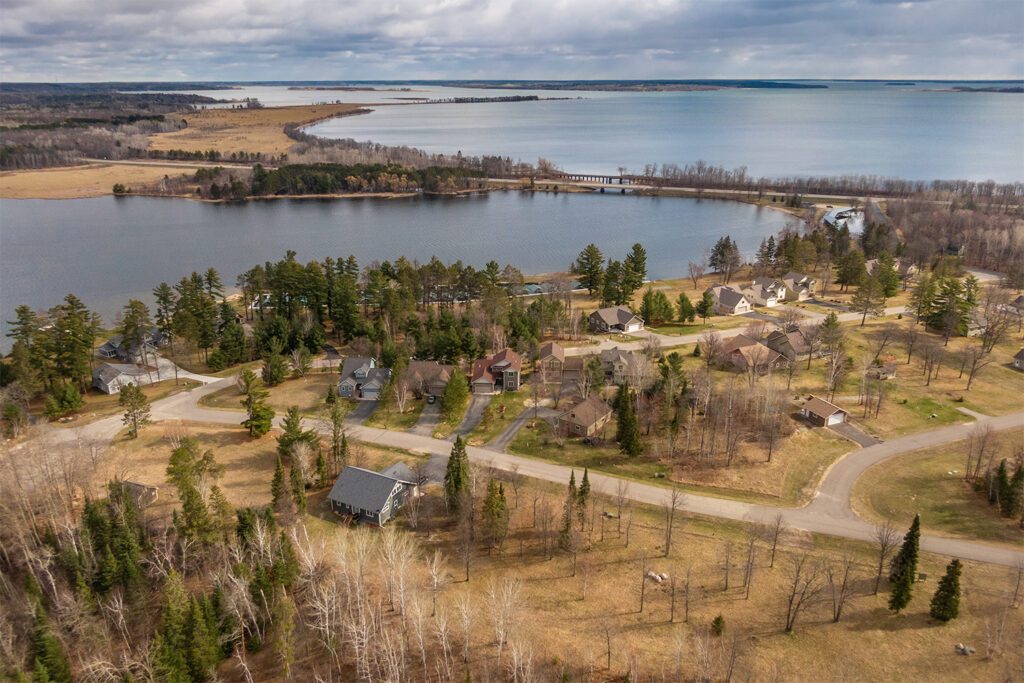
Vacation rental restrictions are reshaping the Minnesota lake property market in ways that significantly impact both property values and investment returns. Short-term rental (STR) ordinances across North Central Minnesota counties now regulate everything from guest occupancy limits to permit requirements, creating a complex landscape for lake home buyers and sellers. Understanding how vacation rental restrictions affect Minnesota lake house values is essential whether you’re an investor seeking rental income or a buyer looking for a peaceful retreat. The effects vary dramatically by county, lake quality, and local regulation intensity, with some properties losing substantial value while others maintain or even increase their worth. In this blog post, Nisswa real estate expert Dan Schueller discusses how STR and vacation rental restrictions impact lake property values across the Brainerd Lakes Area and what buyers and sellers need to know before making decisions.
Key Takeaways
- Vacation rental restrictions in North Central Minnesota can decrease lake house values by 5-20% for investment properties by eliminating or reducing short-term rental income potential, particularly in areas like Crow Wing, Otter Tail, and Hubbard counties.
- Properties with transferable STR permits often command premiums of $100,000-$200,000 over comparable non-permitted lake homes, especially on high-demand lakes like Gull Lake and the Whitefish Chain.
- Restrictions affect two distinct markets differently: investor buyers face reduced values due to lost income, while owner-occupant buyers may benefit from increased neighborhood tranquility and preserved residential character.
- Understanding county-specific ordinances, permit transferability, and local enforcement patterns is critical before purchasing any Minnesota lake property, as regulations vary significantly even between neighboring townships.
With nearly 39 years of local experience, real estate expert Dan Schueller and the team at Your Home Sold Guaranteed Realty Exclusive possess unmatched expertise in navigating the complex short-term rental (STR) ordinances across Crow Wing, Cass, and other Central Minnesota counties. He understands precisely how these regulations impact lake house values and has guided hundreds of clients through these specific scenarios. To leverage this specialized knowledge for your lake home purchase or sale, Call or Text (218) 656-6469 Today and Start Packing!
The Dual Impact: How STR Restrictions Affect Different Lake Property Buyers
Vacation rental restrictions create two very different value scenarios depending on who’s buying the property. For investors focused on generating rental income, these regulations typically reduce property values by cutting into potential returns. A lake home on Pelican Lake that could generate $40,000 annually in short-term rentals might see its investor value drop by 30-50% if new county ordinances eliminate or severely restrict that income stream. When evaluating a Minnesota lake house as an investment property, the presence or absence of STR permissions fundamentally changes the financial equation.
However, for owner-occupant buyers seeking a peaceful family retreat, these same restrictions can actually preserve or increase property values. Lakes that enforce strict rental limitations often maintain quieter, more residential atmospheres that appeal to families and retirees. The Brainerd Lakes Area has seen this pattern emerge as some buyers specifically seek properties on lakes with minimal commercial activity. Understanding whether lakefront properties in Minnesota are a good investment requires knowing which buyer pool you’re targeting.
“We’re seeing two completely different markets emerge in North Central Minnesota lake properties. Investor buyers are willing to pay significant premiums for unrestricted properties on high-quality lakes, while family buyers are increasingly attracted to lakes where rental activity is limited and the focus is on residential use. Understanding which market you’re in makes all the difference in pricing and marketing strategy.” – Dan Schueller
The value impact depends heavily on the specific lake and local enforcement. Premium lakes like Gull Lake, Cross Lake, and the Whitefish Chain maintain strong values regardless of rental restrictions because buyer demand remains high for both use cases. Smaller recreational lakes may see more dramatic price swings when regulations change. The key is matching the property’s characteristics with the right buyer pool, which requires deep local market knowledge.
County-by-County STR Regulations Across North Central Minnesota
Nisswa and the broader North Central Minnesota real estate market face varying STR regulations depending on county jurisdiction. Crow Wing County, home to many of the region’s most desirable lakes, implemented comprehensive STR ordinances in 2020 that require annual licensing, tie occupancy limits to septic capacity, and establish enforceable quiet hours. Properties in Crow Wing County must obtain permits before operating as short-term rentals, and these permits come with ongoing compliance requirements that add to operational costs.
Otter Tail County passed even stricter regulations in 2024, focusing on guest behavior and property maintenance standards. The ordinances prohibit additional tents and RVs beyond the primary dwelling, enforce strict quiet hours, and hold property owners liable for guest violations. For lake homes in areas like Battle Lake and Ottertail Lake, these rules have shifted buyer preferences toward owner-occupied use. Hubbard County, encompassing popular lakes near Park Rapids, requires annual licensing and regular inspections tied to local health and safety standards.
Key regulatory elements across the region include:
- Annual permit fees ranging from $200-$500 depending on county
- Occupancy limits based on septic system capacity (typically 2 guests per bedroom plus 2 additional)
- Local property manager requirements for non-resident owners
- Quiet hours enforcement (typically 10 PM – 8 AM)
- Parking restrictions preventing on-street guest parking
- Regular safety inspections for fire, electrical, and structural compliance
Cass County and Aitkin County maintain somewhat lighter regulatory frameworks but still require basic licensing and compliance with state shoreland management rules. When you’re searching for the best lakes in Minnesota to buy property, understanding these county-level differences is essential. Some buyers specifically target counties with more flexible regulations if rental income is their primary objective.
STR Regulations By County
| County | Regulation Level | Permit Fees | Key Requirements | Enforcement |
|---|---|---|---|---|
| Crow Wing | Comprehensive (Since 2020) | $300-$500 annually | Annual licensing, occupancy tied to septic capacity, quiet hours enforcement | Active permit system with compliance monitoring |
| Otter Tail | Strictest (Updated 2024) | $400-$500 annually | Guest behavior standards, no additional tents/RVs, owner liability for violations | Strict enforcement with violation penalties |
| Hubbard | Moderate | $250-$400 annually | Annual licensing, regular safety inspections, health standards compliance | Regular inspection program |
| Cass | Light | $200-$300 annually | Basic licensing, shoreland management compliance | Minimal active enforcement |
| Aitkin | Light | $200-$300 annually | Basic licensing, state shoreland rules | Complaint-driven enforcement |
The transferability of STR permits varies significantly by jurisdiction. Some counties issue permits tied to the property that transfer with sale, while others require new applications when ownership changes. This distinction can affect property values by tens of thousands of dollars, particularly on high-demand lakes where permits are limited or grandfathered.
Real Market Impact: How Values Change Under Different Restriction Scenarios
The financial impact of STR restrictions on lake house values becomes clear when comparing actual scenarios across the Brainerd Lakes Area. A well-maintained lake home on Gull Lake with existing STR permissions might command $750,000 from an investor buyer, while an identical property on the same lake without rental rights could sell for $600,000-$650,000 to an owner-occupant buyer. That $100,000-$150,000 difference reflects the capitalized value of lost rental income over time.
Consider a typical investment analysis. A lake property generating $45,000 annually in gross STR income (after platform fees), with expenses of 35% for management, cleaning, maintenance, and utilities, produces about $29,000 in net operating income. Using a 6% capitalization rate common in the vacation rental market, that income stream supports approximately $483,000 in property value. If county regulations eliminate short-term rentals and the property converts to long-term rental at $24,000 annually (with 30% expenses), the net income drops to $16,800, supporting only $280,000 in value at the same cap rate. That represents a 42% value reduction purely from the regulatory change.
“The math on lake property values is straightforward when you understand the income component. For properties where rental income was a significant factor in the purchase price, losing that capability through new restrictions directly impacts what buyers will pay. We’ve seen properties that sold for $700,000 as active vacation rentals struggle to find buyers at $525,000 after the county eliminated STR permissions. That’s real money affecting real sellers.” – Dan Schueller
However, market dynamics aren’t always so straightforward. In some cases, STR restrictions on one lake drive investor buyers to nearby unrestricted lakes, creating localized demand surges. Properties on the Whitefish Chain have seen sustained value growth partly because they remain relatively unrestricted compared to more regulated alternatives. Understanding whether Minnesota lakefront property holds its value requires analyzing both the specific property and broader market trends.
Value impact factors to consider:
- Lake quality and recreational appeal (Class A lakes maintain values better)
- Distance from major metro areas (closer lakes see stronger owner-occupant demand)
- Property condition and amenities (high-quality homes attract both markets)
- Permit transferability and grandfathering status
- Local enforcement intensity and violation penalties
- Available alternative uses (long-term rental, corporate housing, personal use)
The investment potential of the Brainerd Lakes Area remains strong even with STR restrictions, but success requires matching property characteristics with appropriate buyer expectations and pricing strategies.
Critical Due Diligence: What to Verify Before Buying or Selling
Smart lake property buyers and sellers in Nisswa and surrounding communities must conduct thorough due diligence on STR regulations before any transaction. Start by obtaining the current county ordinance that governs short-term rentals in the property’s specific jurisdiction. Don’t assume regulations are consistent even within the same county, as some townships have additional restrictions beyond county-level rules. Contact the county planning or zoning department directly to confirm the property’s current status and any pending regulatory changes.
Verify whether an existing STR permit or license is active, valid, and transferable to a new owner. Request documentation showing the permit number, issue date, renewal requirements, and any conditions or restrictions attached. Some grandfathered permits may not transfer with sale, making them essentially worthless to a buyer despite adding value for the current owner. Review the property’s rental history for any violations, neighbor complaints, or enforcement actions that could affect future permit renewals or transferability.
Request detailed financial records if the property currently operates as a short-term rental. At minimum, obtain 24 months of booking data, occupancy rates, nightly rates by season, cleaning and management costs, and maintenance expenses. Compare this actual performance against the property’s income claims and verify that all local lodging taxes have been paid and sales tax collected appropriately. Unpaid tax liabilities can transfer to new owners in some jurisdictions.
Essential questions to ask when buying lake property include:
- What are the current county and township STR regulations for this specific property?
- Does the property have an active, transferable STR permit?
- Are there pending ordinance changes that could affect rental rights?
- What is the septic system capacity and how does that limit occupancy?
- Has the property received any violation notices or neighbor complaints?
- What percentage of properties on this lake operate as short-term rentals?
- How does the county enforce STR regulations and what are typical penalties?
Working with a realtor who specializes in Minnesota lake properties provides access to local market knowledge about which properties have solid rental rights and which face uncertainty. Experienced agents attend county board meetings, track proposed ordinance changes, and understand the political dynamics that might lead to stricter regulations. This intelligence helps buyers avoid costly mistakes and helps sellers position properties appropriately for their target market.
Consider consulting with a local property manager who actively operates vacation rentals in the area. They can provide realistic income projections based on actual market performance and flag potential operational challenges before you commit to a purchase. Understanding what questions to ask when buying lake property in Minnesota includes diving deep into rental regulations and their enforcement.
Why Choose Dan Schueller to Navigate Minnesota Lake Property Purchases
With nearly 39 years of experience in North Central Minnesota real estate, Dan Schueller and the team at Your Home Sold Guaranteed Realty Exclusive bring unparalleled expertise to lake property transactions affected by vacation rental regulations. As a recognized top realtor in Nisswa, Dan has guided hundreds of buyers and sellers through complex STR scenarios, helping investors maximize returns while protecting owner-occupant buyers from regulatory surprises. The team’s deep relationships with county planning departments across Crow Wing, Cass, Hubbard, Aitkin, and Otter Tail counties provide clients with early intelligence on proposed ordinance changes before they become public knowledge.

Your Home Sold Guaranteed Realty Exclusive maintains a comprehensive database of STR permit status across major lakes in the region, giving clients immediate access to which properties have transferable rental rights and which face restrictions. This proprietary information helps buyers make informed decisions quickly in competitive markets. The team’s 100+ annual home sales in the local Minnesota market include significant lake property transactions, providing real-world data on how STR restrictions affect pricing and buyer behavior. Dan’s specialization in lake homes, land lots, and waterfront properties means he understands the nuances of shoreland regulations, septic capacity issues, and lake quality classifications that impact both rental potential and long-term value.
Our Guarantees
Clients benefit from multiple guarantees designed to protect their interests throughout the transaction. The Your Home Sold Guaranteed program eliminates the risk of owning two properties during a transition, while the Buyer Cancellation Guarantee allows clients to exit agreements if service doesn’t meet expectations. The team’s track record of selling homes 70% faster than other agents and for 10% more than market average translates directly to better outcomes for both buyers and sellers in the lake property market. With hundreds of 5 Star Google reviews from satisfied clients, the team’s reputation reflects consistent results across various market conditions.
Whether you’re buying homes for sale in Nisswa for investment purposes or need to sell your home in Nisswa under new STR restrictions, the team provides honest guidance tailored to your specific situation. Dan’s extensive network includes property managers, vacation rental operators, and long-term investors who can provide additional perspectives on income potential and operational challenges.
To Discuss Your Home Sale or Purchase, Call or Text (218) 656-6469 Today and Start Packing!
Follow Us on Social Media
Stay connected with the latest North Central Minnesota real estate news, lake property market updates, and vacation rental regulation changes by following Your Home Sold Guaranteed Realty Exclusive on social media:
FAQ:
Yes. Properties with active, transferable short-term rental (STR) licenses or permits usually sell for more and attract more buyers. These homes are favored by investors seeking rental income and give new owners immediate rental capability.
Absolutely. A home with a “grandfathered” license—meaning the STR permit can transfer to a new owner—often carries a premium vs. other homes, especially in highly regulated areas.
Buyers want certainty. Homes with clear, compliant, and transferable STR licenses are worth more because investors face less risk and can rent immediately.