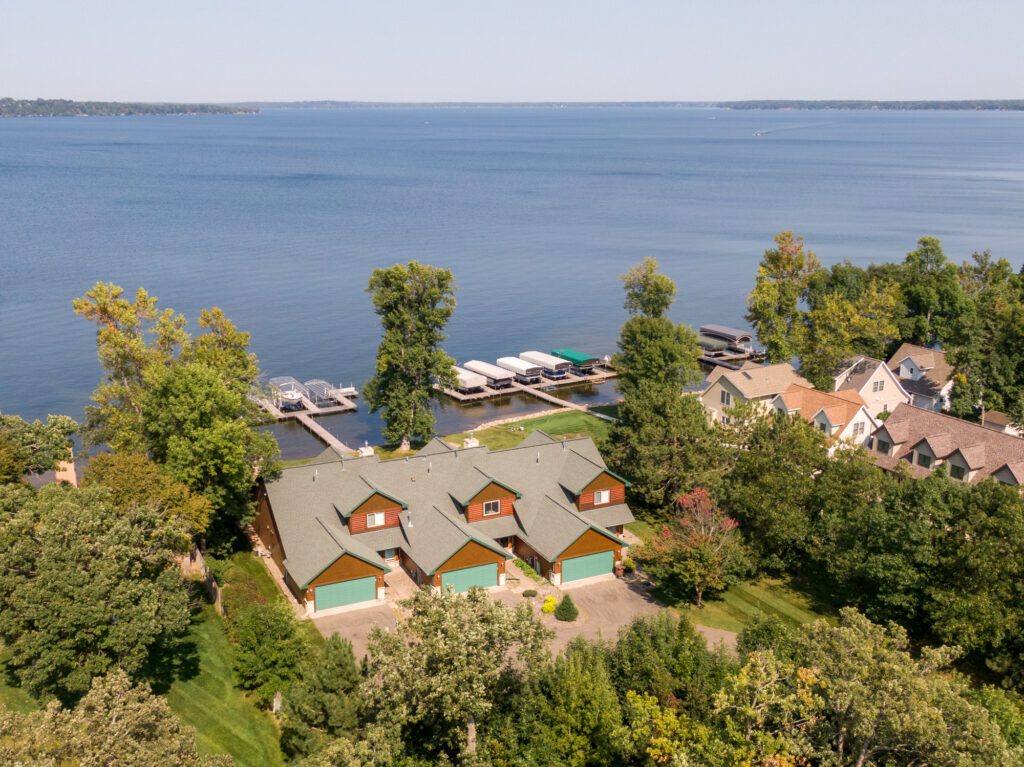
Gull Lake’s water clarity places it among the cleaner large lakes in the Brainerd Lakes area, and that reputation draws lakefront buyers from across North Central Minnesota real estate markets and beyond. For anyone seriously considering a purchase on Nisswa real estate or the broader Gull Lake chain, the clarity measurement is the first number to understand, but it is not the last. The figures in this guide are 2025 summer averages, the most recent readings published by the MPCA as of this 2026 compilation. MPCA summer monitoring data lags one year, so no reading here should be called a 2026 figure. What those numbers mean for a specific property, its dock, its shoreline bottom, and its septic system, is what this post is actually about. In this blog post, Nisswa real estate expert Dan Schueller discusses what Gull Lake’s water clarity measurements mean for buyers considering a lakefront purchase in the Brainerd Lakes area.
Key Takeaways
- MPCA monitoring recorded 15.1 feet of Secchi depth on Gull Lake in 2025, placing it among the clearer large lakes in the Brainerd Lakes area, though the ten-year trend from 2016 to 2025 runs in the murkier direction.
- Upper Gull Lake reads materially lower clarity than the main basin, recording just 10.4 feet in 2025, so buyers must confirm which basin a listing sits on before comparing water quality data.
- Clarity is a lake-level fact shared by every house on Gull Lake; what varies property to property is the shoreline bottom, dock depth, septic condition, well location, and elevation.
- Confirmed invasive species on Gull Lake include zebra mussels (2010) and Eurasian watermilfoil (2026), both of which carry real ownership costs that a buyer should understand before closing.
MPCA monitoring recorded a Secchi depth of 15.1 feet on Gull Lake in 2025, and the Minnesota DNR classifies the lake as Mesotrophic with a Trophic State Index of 41, indicating moderate nutrient levels and good overall clarity. The ten-year trend from 2016 through 2025 runs in the murkier direction, a measured shift worth noting even though the lake still reads clearly. Buyers should also confirm which basin a listing sits on, as Upper Gull Lake recorded only 10.4 feet of Secchi depth in 2025 and carries a TSI of 48.
To Discuss Your Home Sale or Purchase, Call or Text Today and Start Packing!
About Dan Schueller, Your Nisswa Real Estate Expert
This blog post is provided by Nisswa real estate expert Dan Schueller and the team at Your Home Sold Guaranteed Realty Exclusive. With over 50 years of experience in the North Central Minnesota real estate market, Dan and the team have built a reputation as one of the area’s most trusted and effective real estate professionals. As an associate broker with an office in Nisswa, we have successfully helped hundreds of families buy and sell homes each year, developing deep expertise in Nisswa’s lakefront properties, land sales, and Minnesota real estate regulations.
As Nisswa residents, we have a direct understanding of the local market conditions, county-specific procedures, and community needs across Crow Wing, Cass, Hubbard, Aitkin, Todd, Wadena, and Morrison counties. Our commitment is to provide trusted, authoritative real estate information to our neighbors in Nisswa and the surrounding North Central Minnesota communities. However, this information does not constitute legal advice or a guarantee of specific results. For personalized guidance on your unique home buying or selling situation, contact us today for a free, no-obligation consultation.
What Gull Lake’s Clarity Numbers Actually Mean
A Secchi disk is a black-and-white disc lowered into the water until it disappears from view; the depth at that point is the Secchi reading. It is the most widely used field measure of water clarity, and it is the number behind every lake quality discussion in the Brainerd Lakes area. If you are looking at Minnesota real estate along the water, understanding these numbers is critical.
MPCA monitoring recorded 15.1 feet of Secchi depth on main Gull Lake in 2025. In practical terms, a person standing chest-deep off a dock on a calm summer morning can typically see the bottom clearly. Open-water swimming visibility is good on most days. The Minnesota DNR classifies Gull Lake as Mesotrophic with a TSI of 41, meaning moderate nutrient levels, solid clarity, and an algae bloom risk that is real but not elevated the way eutrophic lakes present. The lake covers 10,010 acres and reaches a maximum depth of 80 feet, with 28 percent of its area shallow enough for rooted plants to grow.
The ten-year trend from 2016 through 2025 runs in the murkier direction according to MPCA records. That directional shift does not mean the lake is impaired today, but it is the slowest and least reversible factor a buyer takes on. A buyer should look at the full trend line on the DNR LakeFinder page for the specific basin rather than relying on any single year’s reading. If you plan to sell your home in Nisswa later, these trends can eventually impact resale appeal.
The basin distinction matters more than most buyers expect. Upper Gull Lake sits on the same chain and shares the Gull Lake name, but MPCA monitoring recorded only 10.4 feet of Secchi depth there in 2025, with a TSI of 48. That is a materially different water body from main Gull Lake. As a top realtor in Nisswa, Dan Schueller always ensures clients understand exactly which regulatory framework and water quality readings govern their specific shoreline segment.
“One of the first things I walk buyers through when they are shopping Gull Lake is confirming the basin ID on any listing they are considering. People find a property described as ‘Gull Lake’ and assume the clarity data they looked up applies. Sometimes it does, and sometimes they are looking at the main basin numbers while the property is on Upper Gull. That one check changes the whole picture.” – Dan Schueller
How Each Lake Figure Becomes a Property Question
Clarity tells a buyer which lake they are on. The property tells them what that lake actually feels like from the dock, and those two questions have different answers. When evaluating homes for sale in Nisswa along the lakefront, the five factors below are the ones Dan Schueller’s clients ask about most.
The Shoreline and Lake Bottom
Gull Lake’s 28 percent littoral share means roughly that proportion of the lake is shallow enough for rooted plants to grow, that is, water under about 15 feet. What it does not tell a buyer is what the bottom looks like at a specific property’s shoreline. Sand, rock, and muck behave very differently for swimming, weed growth, and daily maintenance. A muck bottom holds organic debris, can cloud the water near shore even when the open lake reads clear, and makes barefoot entry less appealing.
Wind exposure compounds the picture. A property on an exposed stretch of shoreline can collect algae and organic material drifting from the open lake even when that lake’s measured clarity is excellent. The buyer’s experience at the dock is what truly matters.
The Dock and Boat Lift
With a maximum depth of 80 feet, Gull Lake has both a gradual shelf and genuine deep water. The shelf depth at any specific shoreline still has to be measured at the property. A dock on a long gradual shelf may need to extend further than a buyer expects before reaching water deep enough to moor a pontoon or set a lift at the right height.
Gull Lake carries two confirmed invasive species that bear directly on dock and lift ownership. Zebra mussels were confirmed in 2010. They encrust docks, lifts, ladders, and any hardware left in the water, shortening equipment life. Eurasian watermilfoil was confirmed in 2026. Milfoil affects weed density in shallow areas and can carry lake association assessment costs for treatment.
The Septic System
A failing septic system near the shoreline is both a water quality problem and one of the most expensive surprises on a lake purchase. Minnesota requires an ISTS (Individual Sewage Treatment System) compliance inspection at point of sale for many property transfers. Crow Wing County and Cass County each administer their own compliance programs for Gull Lake properties. Ensure you verify system capacity relative to the current home’s footprint and use.
“The lake figures narrow down which lake a buyer wants to be on. Walking the shoreline with someone who knows these lakes is what decides which house. Two properties with identical square footage and the same lake address can present completely differently when you are standing at the waterline in August.” – Dan Schueller
Gull Lake Water Clarity vs. Nearby Brainerd Lakes Area Lakes
| Lake Name | Secchi Depth (2025, MPCA) | Trophic Class (TSI) | Ten-Year Trend | Confirmed Invasives | Notes for Buyers |
|---|---|---|---|---|---|
| Main Gull Lake | 15.1 ft | Mesotrophic, TSI 41 | Murkier (2016-2025) | Zebra mussel (2010), Eurasian watermilfoil (2026) |
Straddles Crow Wing and Cass County; confirm which basin before comparing readings. |
| Upper Gull Lake | 10.4 ft | Mesotrophic, TSI 48 | Steady (2016-2025) | Zebra mussel (2010) | Materially lower clarity than main Gull despite shared chain name. |
| Hubert Lake | 18.0 ft | Oligotrophic, TSI 39 | Clearer (2016-2025) | Zebra mussel (2016) | Highest clarity of lakes shown. |
Source note: All Secchi readings are MPCA-measured 2025 summer averages, the most recent published as of this 2026 guide compilation.
Gull Lake Compared to Nearby Brainerd Lakes Area Lakes
Buyers choosing between lakes in the Brainerd Lakes area often find themselves comparing a handful of similar-sized options. The clarity table above provides a structured starting point using MPCA-measured 2025 summer averages, the most recent readings published as of this 2026 compilation.
Hubert Lake recorded 18.0 feet of Secchi depth in 2025 with a TSI of 39, classifying it as Oligotrophic, and its ten-year trend from 2016 to 2025 runs clearer. That is the highest clarity reading among the nearby lakes in this comparison. Lower Cullen Lake recorded 15.6 feet in 2025 with an improving trend, while Round Lake recorded 14.6 feet with a stable trend. Main Gull Lake at 15.1 feet sits in the middle of this range.
Gull Lake Lakefront Property Due Diligence Checklist
Shoreline and Lake Bottom
- Verify bottom type at waist depth (sand, rock, or muck)
- Assess wind and algae exposure of the frontage
- Evaluate weed density at the shoreline in late summer
Dock and Boat Lift
- Measure water depth at the end of the dock
- Determine dock length required to reach swimmable or moorable depth
- Check lift placement viability given the shallow-water shelf
- Inspect hardware age and condition due to confirmed zebra mussel presence since 2010
- Understand decontamination requirements for boat use on an infested lake
Septic System
- Secure current ISTS compliance certificate (Crow Wing or Cass County)
- Confirm date of the last system inspection
- Measure drain field distance from the ordinary high-water mark
Well
- Verify location relative to the septic field and shoreline
- Check the most recent water test date
Elevation and Bluff
- Note vertical distance from the home to the water
- Inspect bank material and watch for erosion signs
- Identify the highest observed water level markers
Why Choose Dan Schueller to Guide Your Gull Lake Lakefront Purchase
With over 50 years of experience in the North Central Minnesota real estate market, Dan and the team have built a reputation as one of the area’s most trusted and effective real estate professionals. As an associate broker with Your Home Sold Guaranteed Realty Exclusive in Nisswa, Dan has deep expertise in lakefront properties, land sales, commercial and residential real estate throughout the Brainerd Lakes area.
Our Real Estate Expertise
The team at Your Home Sold Guaranteed Realty Exclusive has established their reputation through:
- Successfully helping hundreds of families buy and sell homes each year
- Developing specialized knowledge of North Central Minnesota’s lakefront properties and unique market dynamics
- Selling homes 70% faster than other local realtors through effective marketing techniques
- Building a database of over 17,000 pre-qualified home buyers ready to purchase
- Deep understanding of county-specific regulations across Crow Wing, Cass, Hubbard, Aitkin, Todd, Wadena, and Morrison counties
Why Trust Us
Dan Schueller and the team’s reputation speaks for itself:
- Proven Results: We typically sell homes for 10% more than market average, putting thousands of extra dollars in sellers’ pockets
- Client Satisfaction: Our hundreds of 5 Star Google reviews showcase our commitment to exceptional service
- Guaranteed Performance: Our unique guarantees ensure your complete satisfaction or we’ll buy your home
- Local Knowledge: As Nisswa residents with over 50 years in the market, we understand our community and care deeply about the people we serve
- Lakefront Expertise: We specialize in waterfront properties with deep knowledge of shoreline regulations, dock permits, and lakefront valuation factors
- Personalized Approach: We take time to understand your specific real estate goals, ensuring you’re never just another transaction
Community Commitment
Our dedication extends beyond real estate. We proudly support:
- Homeless and Wounded Warriors – MN with a portion of every transaction
- Nisswa Police and Fire Departments with discounted commissions
- Local charitable organizations throughout North Central Minnesota
- “Go Serve Big” philosophy – changing lives in the communities we live and work in
To Discuss Your Home Sale or Purchase, Call or Text Today and Start Packing!
Contact Dan Schueller and the team at Your Home Sold Guaranteed Realty Exclusive by calling or texting (218) 656-6469 for expert guidance on buying or selling your home in Nisswa and North Central Minnesota.
Follow Us on Social Media
Stay connected with Dan Schueller and Your Home Sold Guaranteed Realty Exclusive for the latest North Central Minnesota real estate insights, market updates, and local community news:
- YouTube – Market updates and property tours
- Facebook – Community engagement and listings
- Instagram – Behind-the-scenes and lifestyle content
- TikTok – Quick tips and market insights
Frequently Asked Questions
MPCA monitoring recorded a Secchi depth of 15.1 feet on main Gull Lake in 2025, the most recent summer average published as of this 2026 guide. The Minnesota DNR classifies the lake as Mesotrophic with a Trophic State Index of 41, indicating moderate nutrient levels and good open-water clarity. The ten-year trend from 2016 to 2025 runs in the murkier direction, which buyers should factor into a long-term ownership perspective.
Upper Gull Lake and main Gull Lake share a chain and a name but are separate basins with meaningfully different clarity readings. MPCA monitoring recorded 10.4 feet of Secchi depth on Upper Gull Lake in 2025, compared to 15.1 feet on the main Gull Lake basin that same year. Buyers shopping listings described as “Gull Lake” should confirm the DNR lake ID number (DOW) on any property to verify which basin the shoreline sits on before comparing water quality data.
Gull Lake has two confirmed invasive species. Zebra mussels were confirmed in 2010 and encrust docks, boat lifts, ladders, and any hardware left in the water, shortening equipment life and requiring boat decontamination at launches. Eurasian watermilfoil was confirmed in 2026 and can affect weed density in shallow areas and contribute to lake association treatment assessments. Buyers should ask about dock hardware age and condition and understand the inspection and decontamination rules that apply to boating on a zebra-mussel-present lake.